
For educational publishers and academic institutions, the physical quality of a textbook is as critical as the content within it. A textbook must withstand rigorous daily use, often for a full academic year or longer. The choice of paper stock, weight, and binding method directly impacts the book’s durability, readability, and overall production cost.
This guide provides a technical overview of textbook printing specifications, focusing on the balance between longevity and budget. Whether you are sourcing for K-12 workbooks, university reference materials, or mass-market educational supplements, understanding these fundamentals will streamline your procurement process.
Understanding Paper Weight (GSM) and Thickness
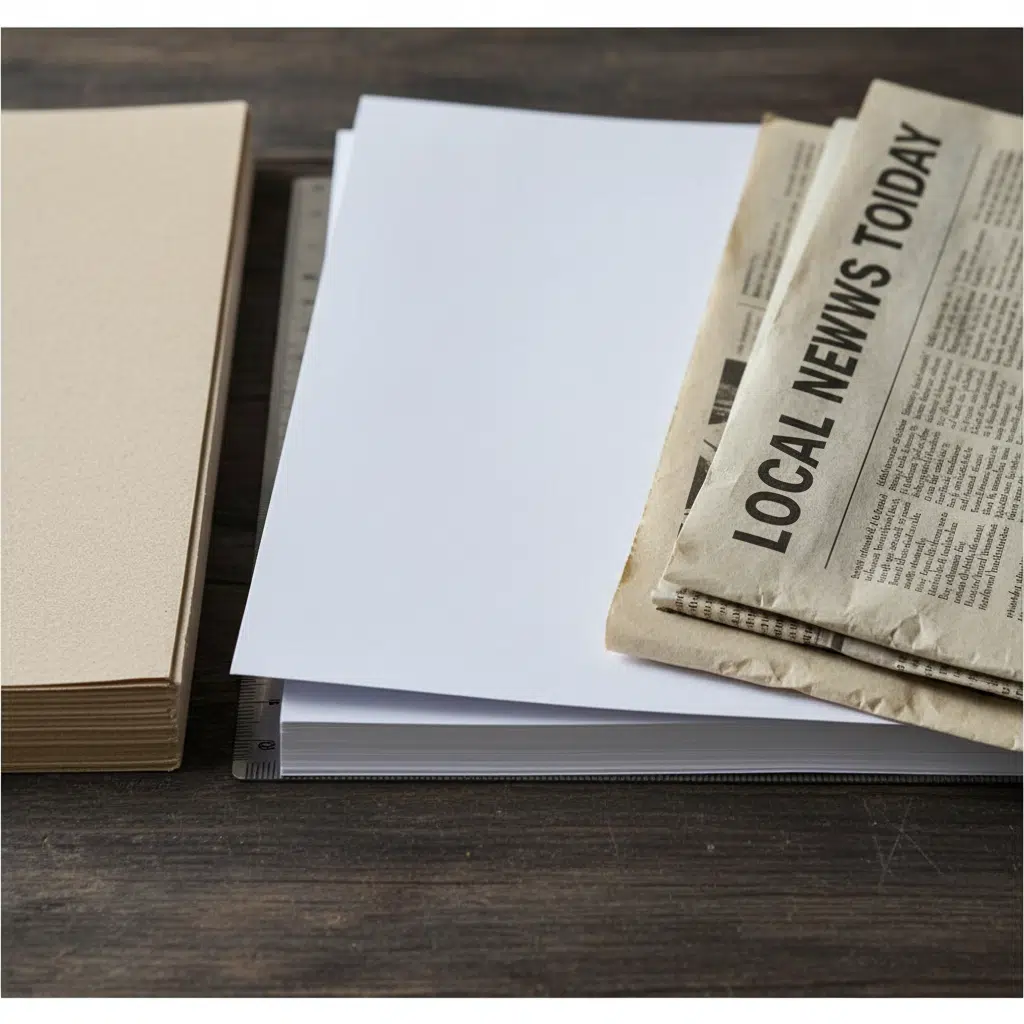
In the printing industry, paper density is measured in grams per square meter (gsm or g/m²). While higher gsm generally correlates with thicker paper, the “bulk” (volume) of the paper also plays a role. For textbooks, choosing the right weight is a trade-off between opacity (preventing show-through) and portability.
- Standard Text Paper (70gsm – 80gsm): This is the global standard for the inner pages of most textbooks. It offers sufficient opacity for double-sided printing of text and simple diagrams without making the book excessively heavy.
- Heavyweight Text Paper (100gsm – 120gsm): Often used for higher-end textbooks featuring full-color photography, art books, or books requiring heavy ink coverage.
- Cover Stock (200gsm – 300gsm): Covers require rigidity. A standard paperback textbook typically uses 250gsm coated stock to provide a sturdy protective layer.
For personalized publishing and standard educational runs, 80gsm uncoated woodfree paper is the most common recommendation. It provides a natural reading experience and excellent writability for students.
Types of Paper for Textbook Printing
Selecting the correct paper grade depends on the subject matter and the intended lifespan of the book.
1. Uncoated Woodfree Paper (Book Paper)
Commonly referred to as “offset paper” or “bond paper,” this is the industry standard for textbooks, workbooks, and novels. Its surface is non-reflective, which reduces eye strain during long study sessions. It is also porous, allowing students to write notes with pencils or pens without smudging.
- Best for: Text-heavy books, math workbooks, and general education materials.
- Standard Spec: 80gsm white or natural (cream) tone.
2. Coated Paper (Art Paper)
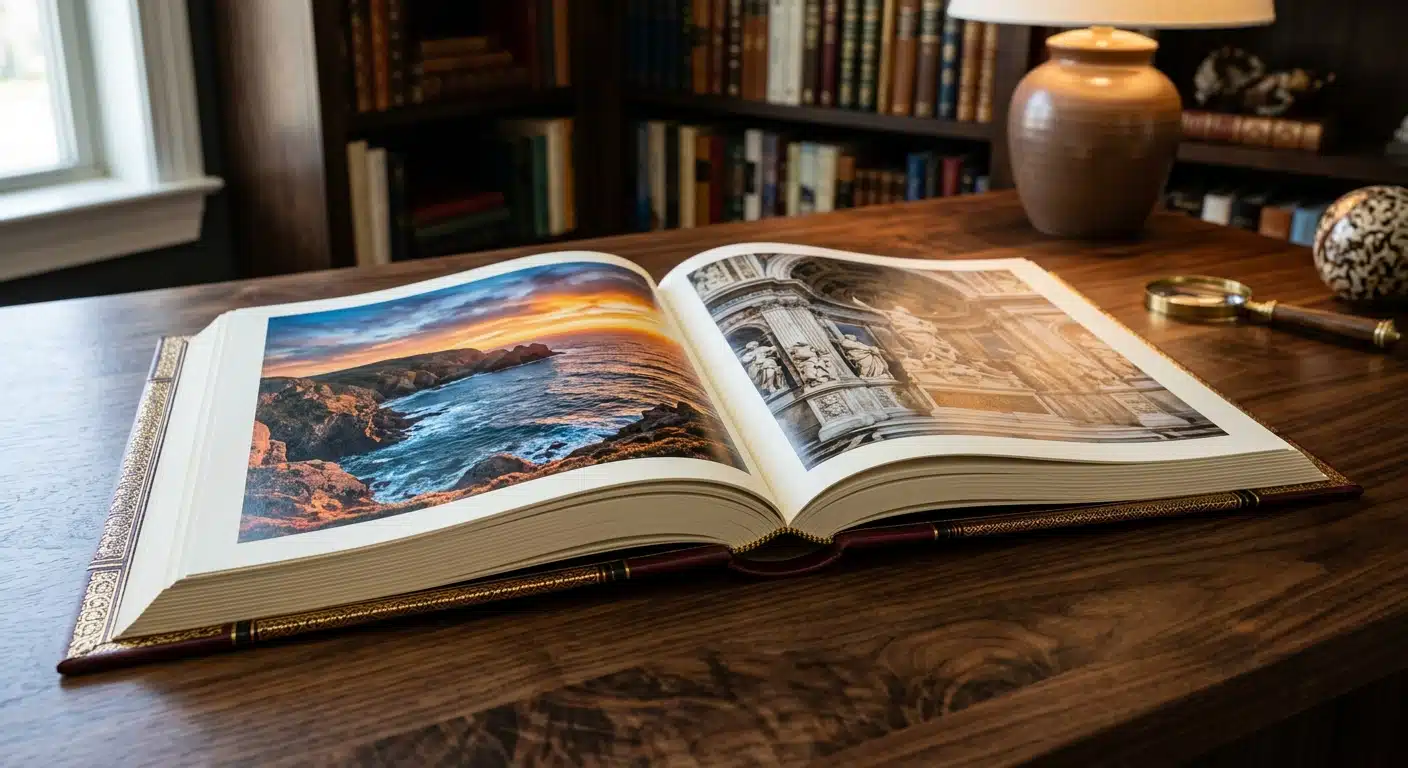
Coated paper has a surface sealant (clay or polymer) that creates a smooth finish. It comes in gloss, matte, or satin varieties. The coating prevents ink from being absorbed deep into the fibers, resulting in sharper images and more vibrant colors.
- Best for: Science textbooks, geography books, and medical references requiring high-resolution imagery.
- Standard Spec: 105gsm to 128gsm for inner pages; 250gsm double-sided coated art paper for covers.
3. Newsprint (Groundwood Paper)
Newsprint is a cost-effective option made from mechanical pulp. It has a shorter lifespan and tends to yellow over time due to lignin content. While not suitable for durable textbooks, it is an excellent choice for disposable materials.
- Best for: Exam papers, temporary practice booklets, and mass-market materials not intended for long-term preservation.
Binding Methods: Durability vs. Cost
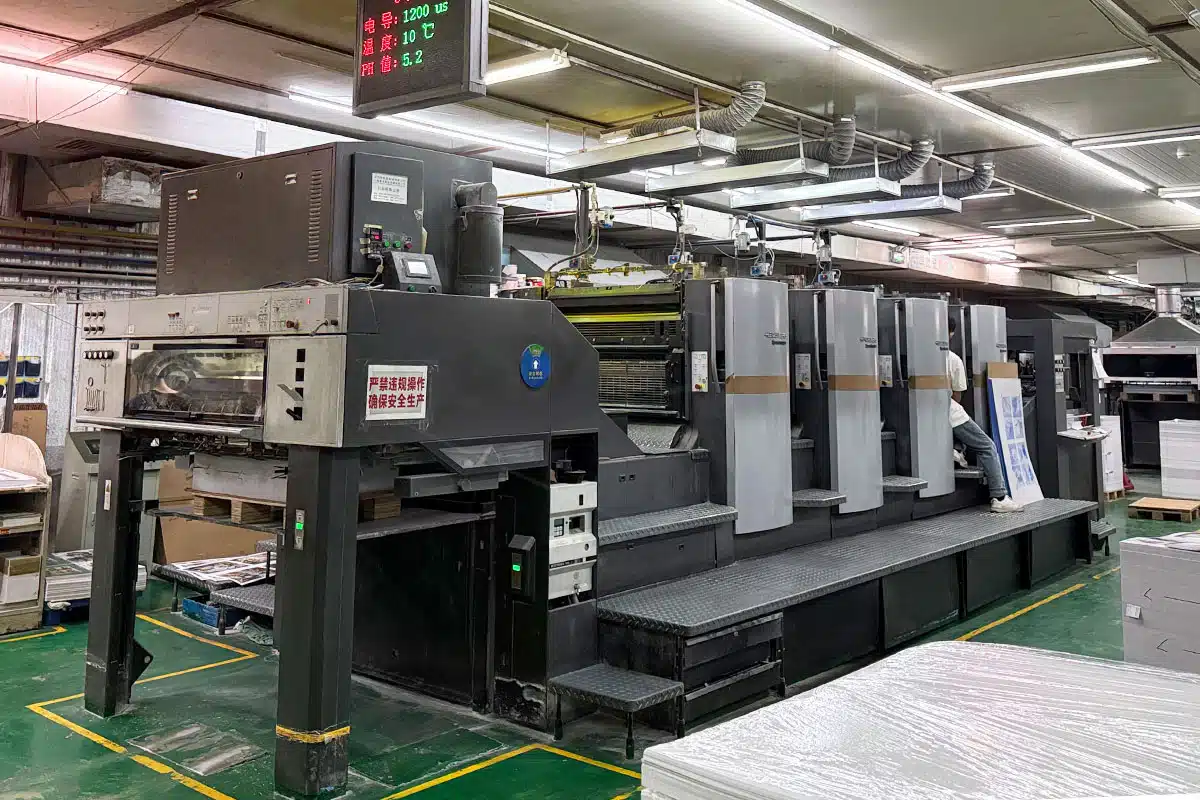
The binding method dictates how well a book lays flat and how long it stays intact. For a deeper dive into production workflows, you can review the Printing process commonly used for books. Here are the primary methods for textbooks:
Saddle Stitching
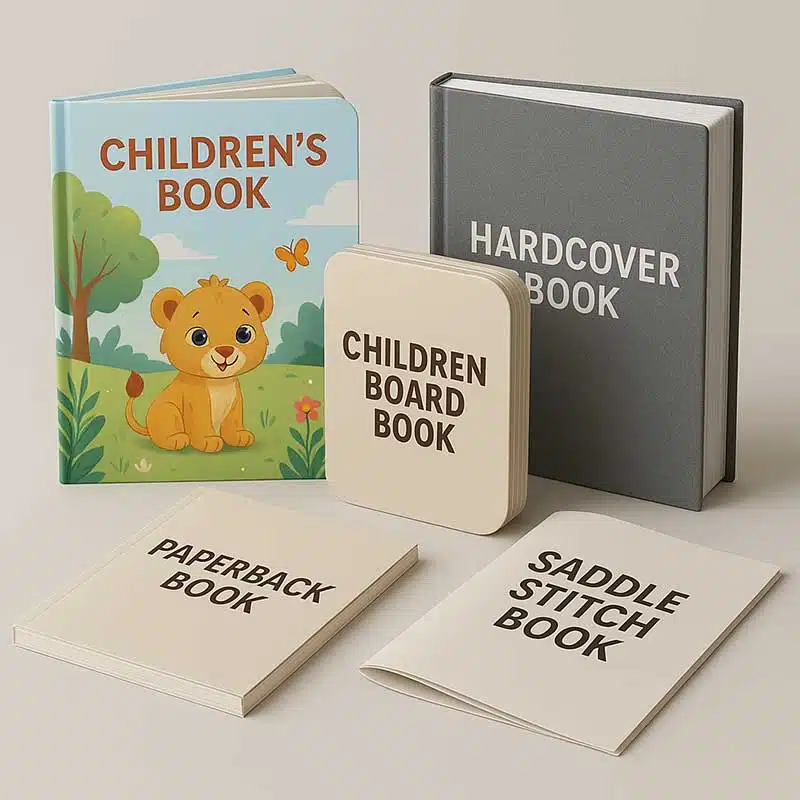
This method involves folding sheets and stapling them through the fold (spine) with wire. It is economical and allows the book to lie perfectly flat.
- Ideal Page Count: 8 to 64 pages.
- Application: Thin workbooks, pamphlets, and quarterly reports.
- Constraint: Page counts must be in multiples of 4. Not suitable for thick volumes.
Perfect Binding (Softcover)
Pages are gathered together, the spine is roughened, and a strong adhesive (EVA or PUR glue) is applied before attaching the cover. This creates a square spine that can be printed on.
- Ideal Page Count: 60+ pages.
- Application: Standard paperbacks, university course readers, and trade books.
- Note: PUR glue is recommended for textbooks as it offers significantly higher pull-strength than standard EVA glue.
Sewn Perfect Binding (Thread Sewing)
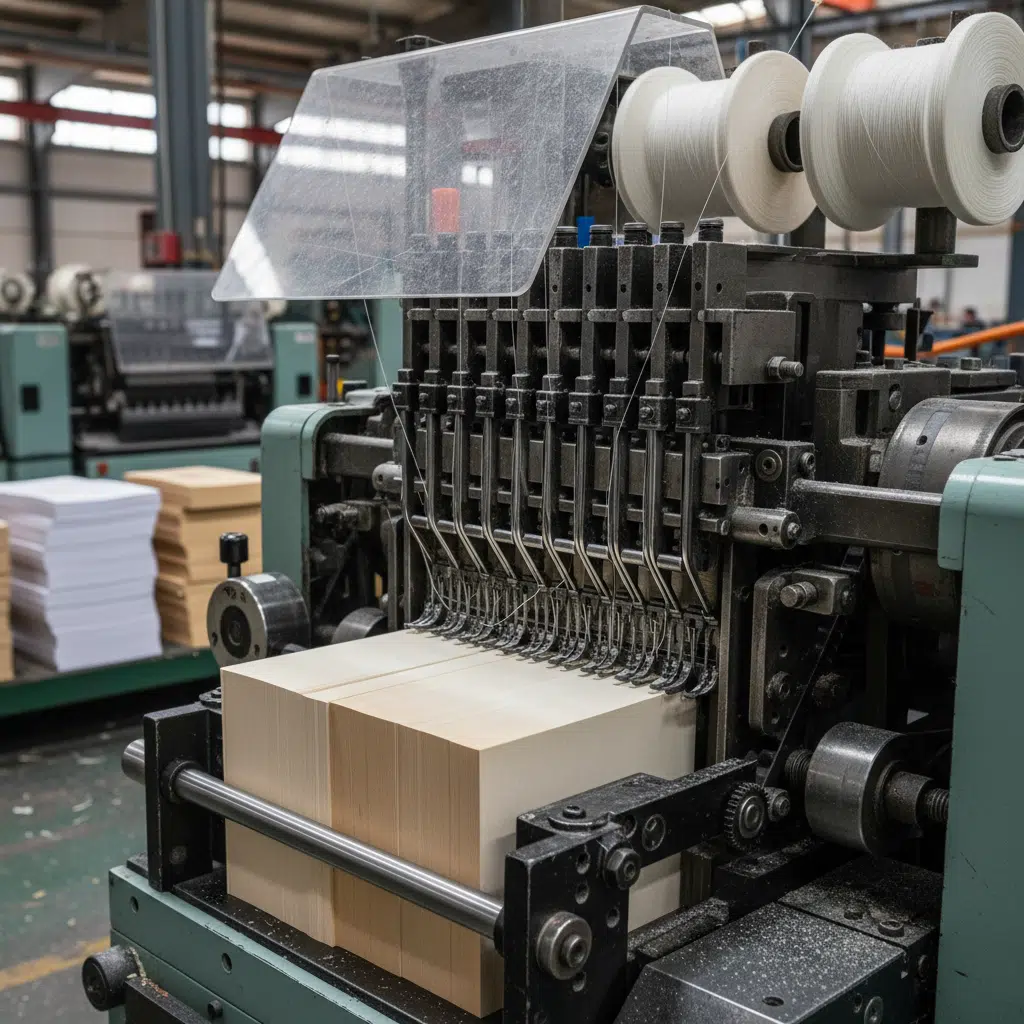
For textbooks that exceed 300 pages or require heavy handling, standard glue binding may not suffice. In this process, signatures (groups of folded pages) are sewn together with thread before the cover is glued on. This is often referred to as “burst binding” or “Smyth sewn” depending on the specific technique.
- Durability: Extremely high. Pages cannot fall out easily.
- Lay-Flat Ability: Excellent.
- Application: Heavy textbooks, dictionaries, and primary school books used daily.
Hardcover (Case Binding)
Hardcover binding involves mounting the printed cover paper onto rigid greyboard (cardboard) usually 2mm to 3mm thick. The inner block is typically thread-sewn for maximum strength. While more expensive, it offers the ultimate protection for reference materials.
Technical Considerations for Procurement
When requesting a quote for textbook printing, specifying the following details will ensure accuracy:
- Opacity: Ensure the paper has high opacity (90%+) if your content includes heavy blocks of color, to prevent the reverse side from showing through.
- Grain Direction: For softcover books, the paper grain must run parallel to the spine. Incorrect grain direction causes books to snap shut or warp.
- Coating Type: For covers, consider adding lamination (gloss or matte). This is not just aesthetic; it protects the ink from scratching and adds moisture resistance.
FAQ: Textbook Printing
What is the minimum order quantity (MOQ) for custom textbooks?
Offset printing typically becomes cost-effective at 500 to 1,000 copies. For smaller batches, digital printing is viable but may limit paper choices slightly.
Can I use 80gsm paper for a photo-heavy textbook?
Yes, but if the ink coverage is heavy (100% saturation), the paper may curl or show through. For image-rich books, upgrading to 100gsm or 105gsm coated paper is recommended.
What is the difference between “textbook paper” and “trade book paper”?
Textbook paper is often smoother and brighter white to facilitate high-contrast reading and note-taking. Trade books (novels) often use “bulky” cream paper which is thicker but lighter in weight.
How do I ensure the binding holds up for a full school year?
Specify “Section Sewn” or “Thread Sewn” binding. Unlike simple glue binding, sewn books are mechanically locked together, making it nearly impossible for pages to detach during rough handling.
Final Recommendations
Choosing the right specifications involves balancing the student’s experience with the publisher’s budget. For most academic needs, 80gsm woodfree paper paired with a 250gsm laminated cover offers a reliable standard. However, specialized subjects may require coated stocks or reinforced bindings.
If you are planning a new edition or a reprint, reviewing the Common sense of textbook printing paper is a good starting point to align your specifications with industry standards.
Ready to print your next run of textbooks? Contact our team today to discuss paper samples, binding options, and to receive a custom quote tailored to your educational requirements.